Factory-direct OEM & ODM
How we make aprons: 17 crafts and 4 production stages in one factory.
ApronCraft does one thing: we design, cut, sew, and decorate aprons for US businesses. Send a brief and a physical sample comes back in 7–10 days; production starts at 100 pieces, quoted line by line and inspected against the sample you approved.
Below: the seventeen crafts behind every order, the fabrics we stock, our certifications, and lead times by tier. Send your brief — a merchandiser replies within 24 hours on business days.
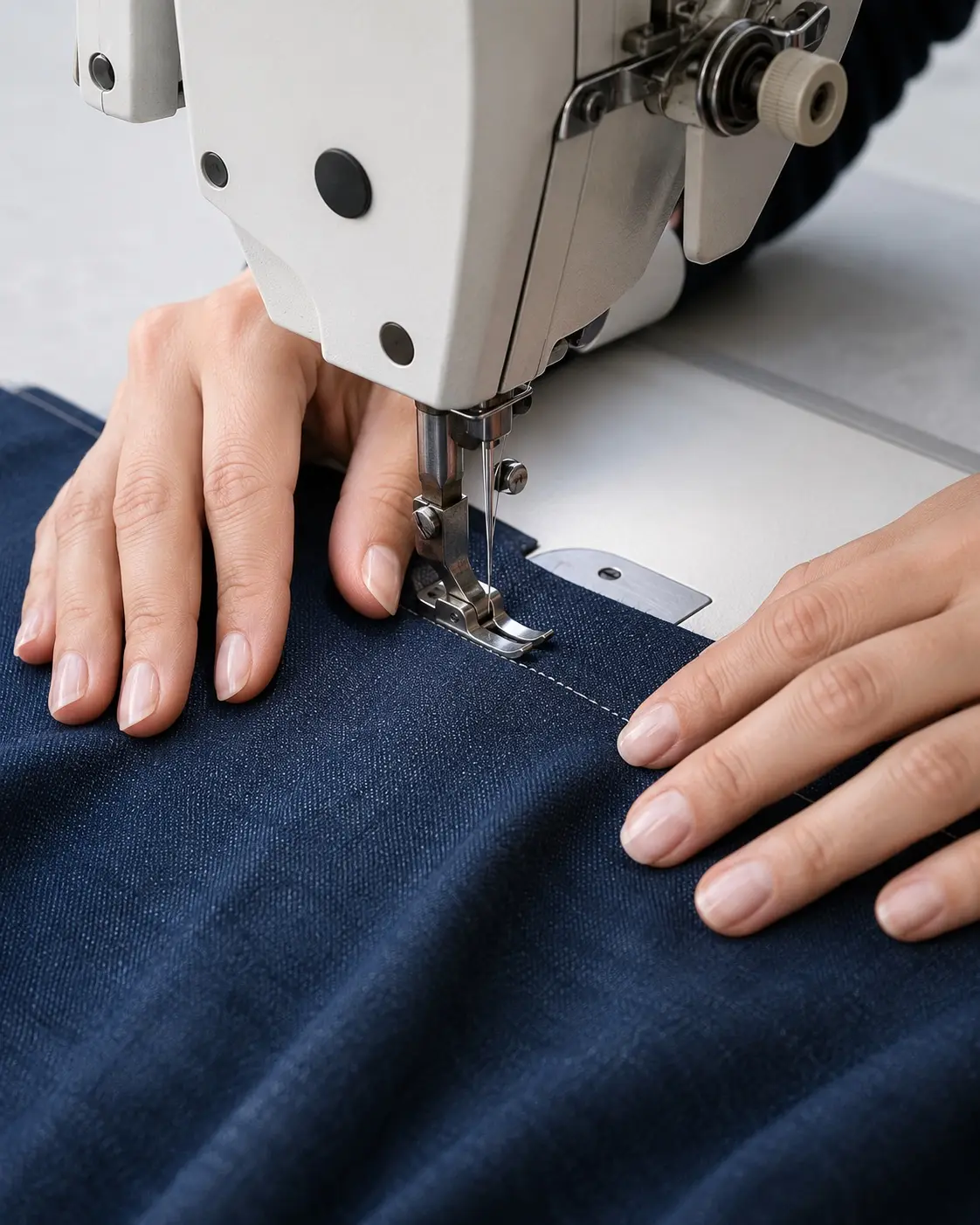
- Minimum order
- 100 pcs
- Sample
- 7–10 days
- Fabric
- Test reports on request
- Factory
- Licensed, sample-first
Craftsmanship
The seventeen crafts in every apron.
An apron looks simple until you count the crafts inside it: a graded pattern, bar-tacked stress points, a digitized logo, a needle-detector pass before packing. These are the seventeen crafts we run on every order — all under one roof, so no subcontractor sits between the promise and the work.
Crafts 01–07
Cutting & sewing
The structural crafts — what decides whether an apron survives a commercial laundry or dies at the pocket corner.
- 01
Pattern drafting & grading
Every style starts as a graded pattern drafted by our pattern makers — from your tech pack, a sketch, or a reference apron you mail in. Sizes are graded from the same master pattern, so a medium reordered next year matches the medium you approve today.
- 02
Marker nesting & stack cutting
Markers are nested to keep fabric waste low — part of how a 100-piece order stays affordable. Panels are cut in stacks, numbered by bundle, and tagged so size runs stay separated all the way down the line.
- 03Signature craft
Bar-tack reinforcement
Every load-bearing join — pocket corners, strap anchors, tie roots — gets a dense zig-zag bar tack. This single stitch is the difference between an apron that survives a year of yanked ties and one that fails in a month.
- 04
Double-needle topstitching
Parallel topstitch runs along pocket edges, hems, and bib tops: it keeps edges flat through hundreds of washes and gives the apron its finished, workwear look.
- 05
Binding & seam finishing
Bias-bound edges on smocks and Japanese-style aprons; flat-felled or overlocked interior seams elsewhere — no raw edges to unravel in the wash.
- 06
Pocket engineering
Patch, bellows, and welt pockets drafted to your tool list: pen slots, towel loops, divided waist pockets, secured phone pockets — with reinforced bottoms where metal rides.
- 07
Hardware setting
Eyelets, rivets, sliders, and snaps are set by machine, not hand hammer — flush, consistent, and torque-tested. Brass, antique brass, gunmetal, or matte black to match your brand.
Crafts 08–13
Decoration
The branding crafts — chosen by fabric, laundry reality, and how loud the logo needs to be.
- 08Signature craft
Embroidery digitizing
Logos are digitized in-house: stitch density is tuned to the fabric weight so canvas does not pucker and linen does not perforate. You approve a stitch-out photo — thread matched to your Pantone references — before any blank is hooped.
- 09
Screen printing
The cost king for bold, flat graphics at volume: one screen per color, low-cure bleed-resistant inks on poly blends, and cured-to-spec so prints survive dozens of washes.
- 10
DTG direct-to-garment
Full-color photographic art with no setup — gradients and fine detail reproduce well on cotton grounds. The right call for samples, small batches, and complex artwork.
- 11
Heat transfer & sublimation
Names, numbers, and full-color marks on polyester grounds — the practical choice for uniform programs that need per-person customization.
- 12
Woven labels
Damask woven labels and hem tags turn a stock silhouette into a private-label product. Produced in one run, then sewn on — the retail-brand finishing move.
- 13
Leather patch debossing
Veg-tan patches, blind or foil debossed, riveted or sewn on. The signature branding for waxed canvas, denim, and any apron where thread would burn or perforate the fabric.
Crafts 14–17
Finishing
The crafts after sewing — how an apron leaves the floor already broken in, compliant, and inspection-passed.
- 14
Pre-shrinking & garment wash
Stock canvas is pre-shrunk before cutting, keeping residual shrinkage under 3%. Garment and enzyme washes deliver aprons already broken in — soft from the first wear.
- 15
Enzyme & stone wash
Wash effects for denim and canvas retail lines, quoted per lot. You approve a wash sample before the bulk run goes through finishing.
- 16
Water-repellent finishes
Durable water-repellent (DWR) finishes for wet stations, bars, and outdoor carts — water beads off the face and the apron dries fast between shifts.
- 17Signature craft
Pressing, needle detection & final QC
Every apron is pressed, passed through a needle detector, measured against your approved sample, and checked for logo placement and stitch density before cartons are sealed.
Fabric library
Fabrics we stock, by weight.
Fabric choice decides how an apron feels at hour eight of a shift and how it looks after fifty commercial washes. We stock the six material families below — follow each to its own page for weights, decoration options, and care — and source specialty fabrics (organic cotton, recycled polyester) when a program calls for them. If you are not sure which weight your environment needs, describe the environment; we recommend the material.
| Fabric | Weight | Best for | Notes |
|---|---|---|---|
| Cotton canvas | 8 oz / 270 gsm | Cafés, bakeries, retail staff | Soft hand feel, great print base |
| Cotton canvas | 10 oz / 340 gsm | Restaurants, studios, daily wear | Our most versatile weight |
| Cotton canvas | 12 oz / 410 gsm | Woodworking, heavy-duty shops | Maximum abrasion resistance |
| Poly-cotton twill | 7 oz / 240 gsm | Hotels, front-of-house uniforms | Colorfast, easy-care, low shrinkage |
| Waxed canvas | 10 oz / 340 gsm | Bars, barbershops, coffee carts | Water-repellent, ages beautifully |
| Denim | 10 oz / 340 gsm | Cafés, barbershops, retail merch | Pre-washed indigo, craft look |
| Linen & linen blends | 6 oz / 200 gsm | Cafés, florists, premium retail | Breathable with a natural texture |
| Full-grain leather | 1.2–1.4 mm | Woodworking, barbers, BBQ | Abrasion-resistant, ages well |
Test reports are available for every stock fabric on request, and any style can be dyed to your Pantone reference. You approve a lab dip before bulk dyeing, so the color you signed off is the color that ships.
How we run production
The four production stages.
An apron looks simple until you count the stress points: pocket corners, strap anchors, waist ties that get yanked thousands of times over a service life. Four stages decide whether yours survive — and all four happen under our roof.
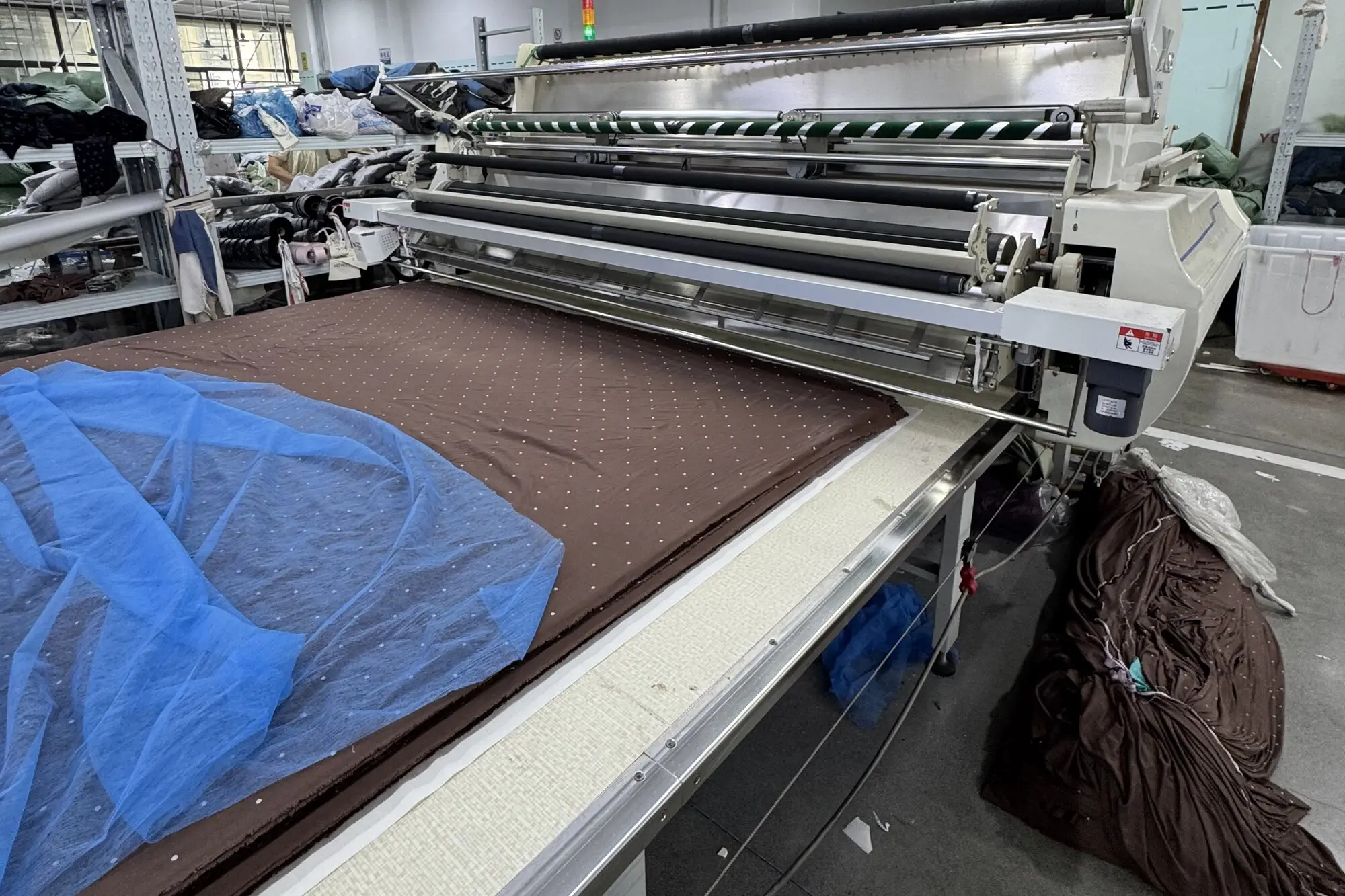
Cutting and pattern making
Every style starts as a graded pattern, not a guess. Send a reference apron, a sketch, or a full tech pack and our pattern makers draft to your measurements, then nest markers to keep fabric waste low — part of how a 100-piece order stays affordable.
Panels are cut in stacks, numbered by bundle, and tagged so size runs stay separated all the way down the line.
Sewing and assembly
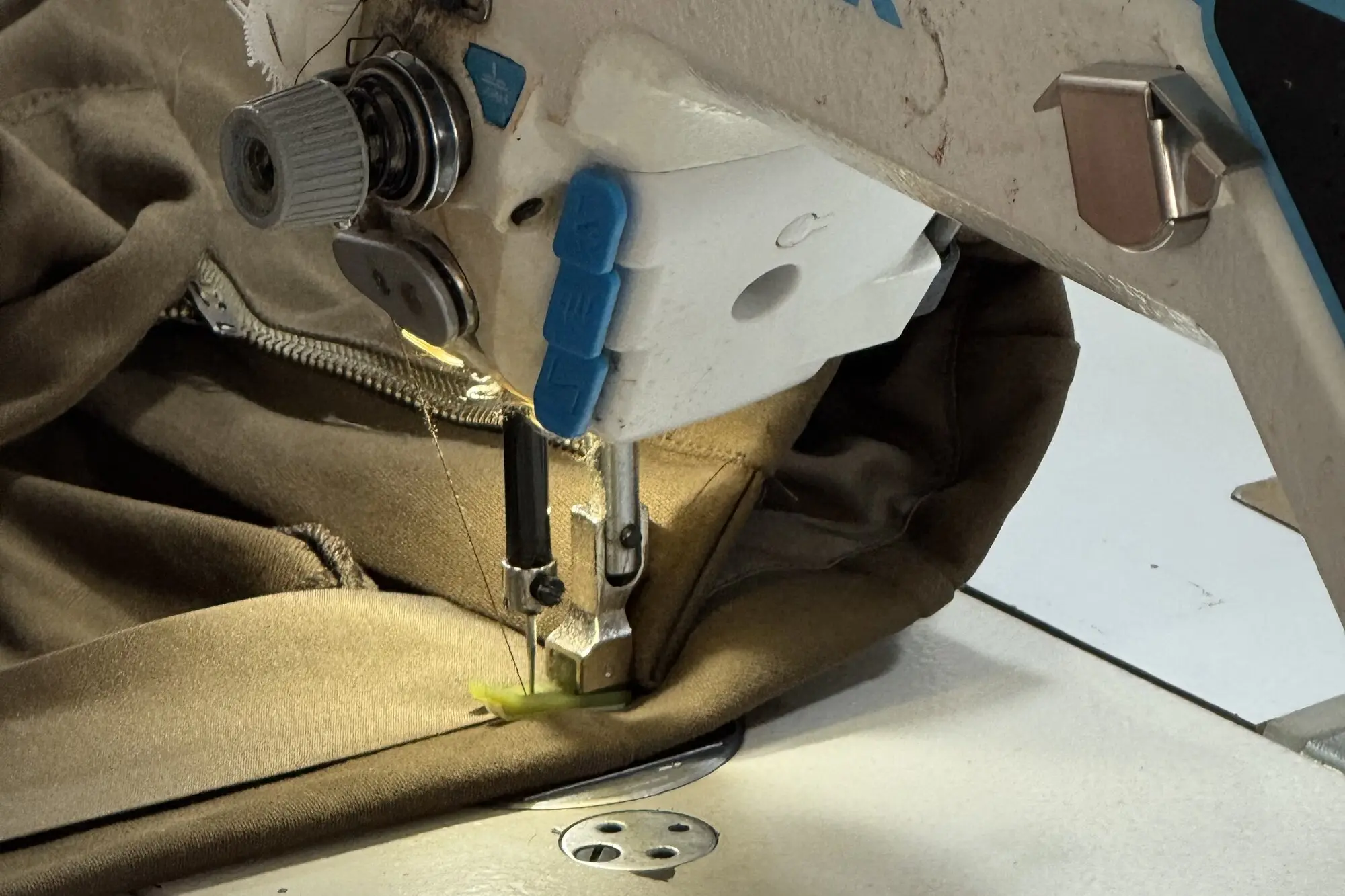
We bar-tack every load-bearing join, double-needle topstitch pocket edges, and finish interior seams so the apron survives commercial laundry cycles, not just the first wear. Operators work in dedicated lines by product type — the team sewing your canvas bib aprons sews canvas bib aprons all day, which is where consistency at volume actually comes from.
Hardware is set by machine, not by hand hammer: eyelets, rivets, and adjusters sit flush and hold torque. Strap lengths and tie positions follow the graded pattern, so a medium today matches the medium you reorder next year.
Logo decoration
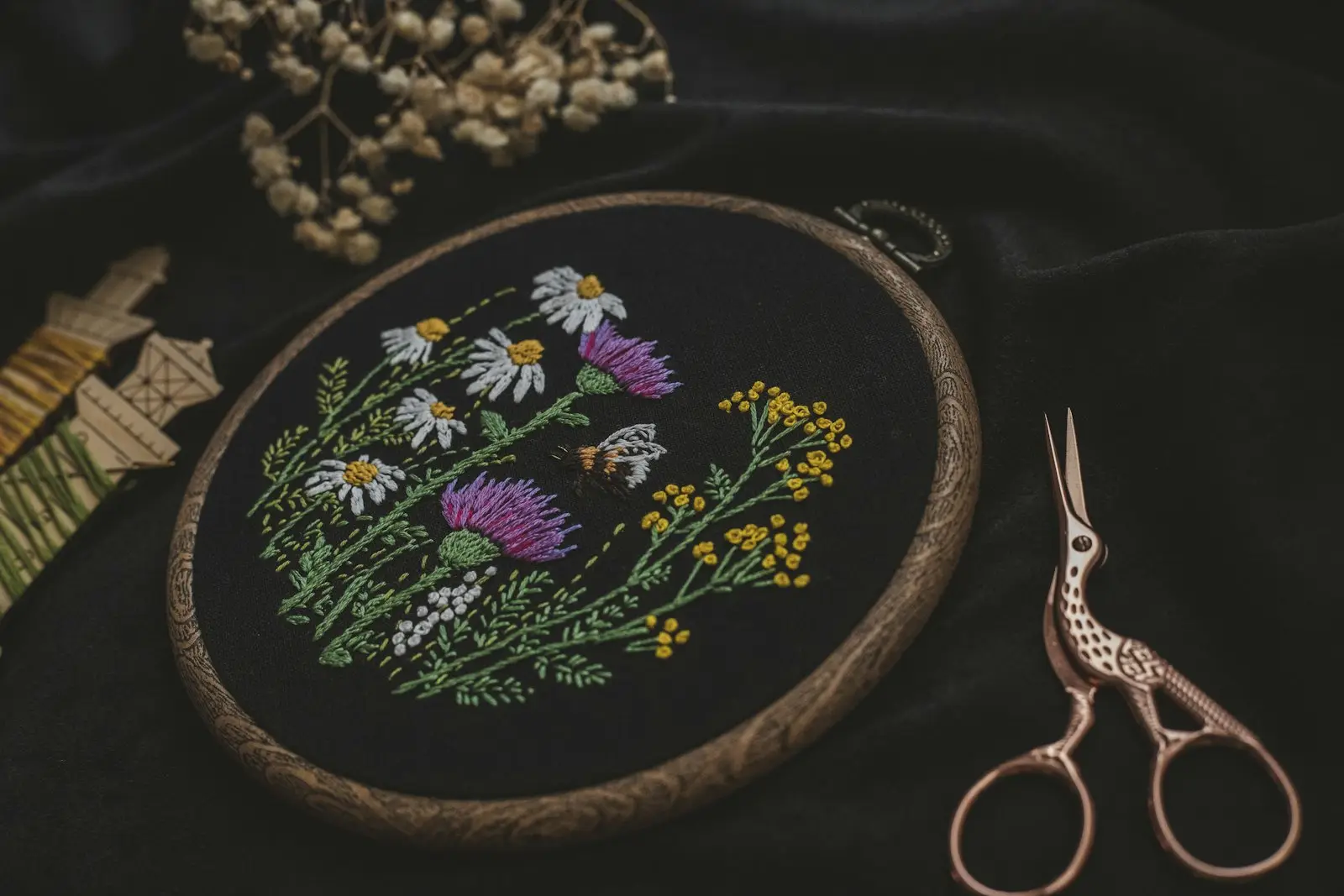
Embroidery is digitized in-house, and you approve a stitch-out photo — thread matched to your Pantone references — before a single blank is hooped. Screen printing suits bold, flat graphics at volume; DTG handles full-color artwork and short runs. Woven labels, hem tags, and leather patches turn a stock silhouette into a private-label product.
Because decoration happens on the same floor as sewing, logo placement is measured against the finished garment, not estimated on a flat panel — chest logos land where a chest logo should sit on every size in the run.
Quality control and packing
Inline inspectors check seams and measurements while panels move down the line. A final QC pass measures finished aprons against your approved sample, checks logo placement and stitch density, and pulls anything with loose threads or shade variation between fabric lots.
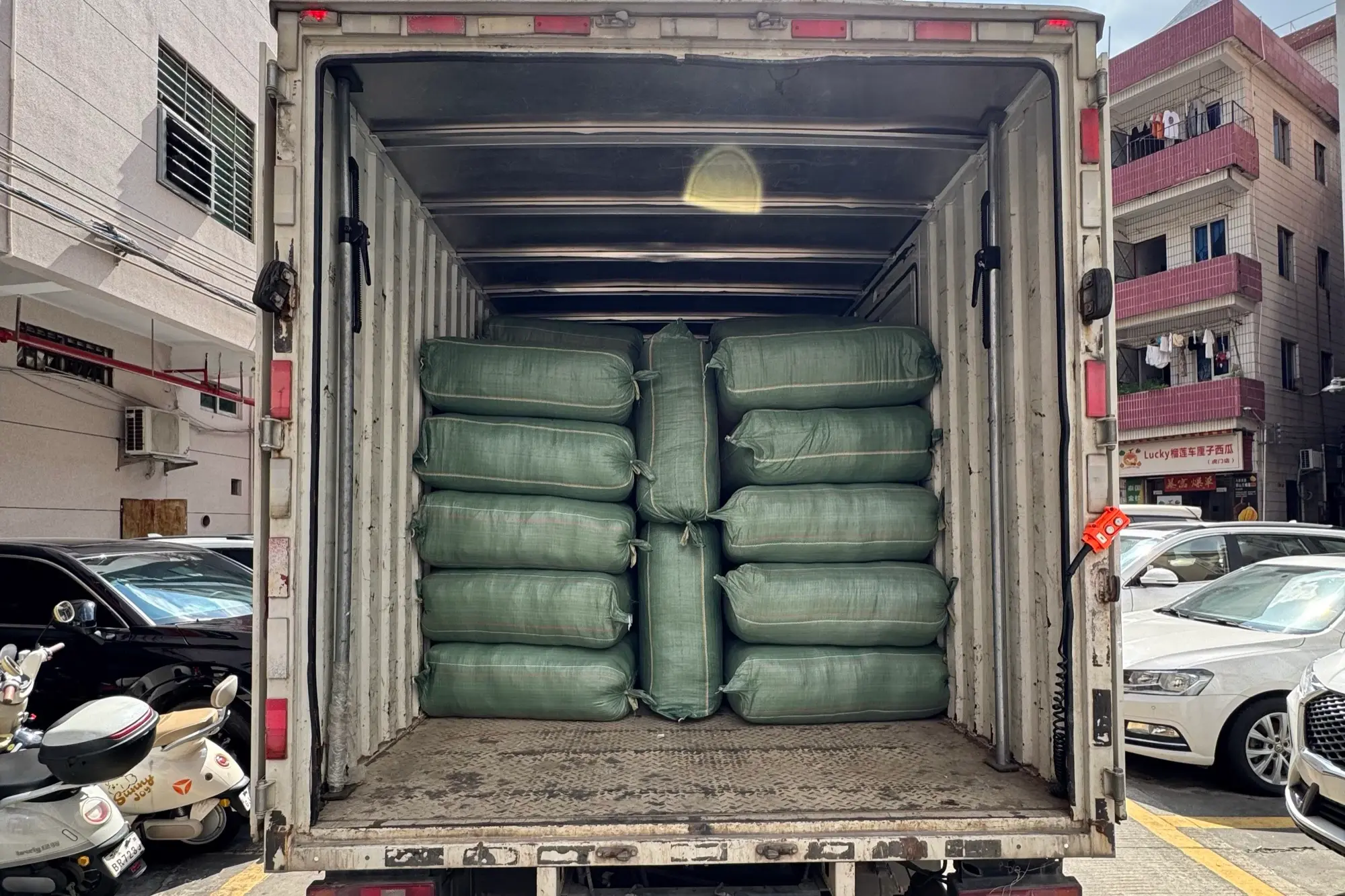
Orders are packed by size and color, with packing lists that match your purchase order line for line — receiving at your warehouse takes minutes, not days. Packaging is chosen to fit your budget and shipping method: woven poly bales for the lowest freight cost by sea, export cartons for air freight or palletized deliveries, and individual polybags or hangtags when you need retail-ready units. You get pre-shipment photos before the balance is due.
Supplier vetting
How to evaluate an apron manufacturer.
Procurement managers vetting an apron manufacturer overseas usually worry about the same three things: will the bulk order match the sample, will it clear US compliance, and will anyone answer when something goes wrong. These six questions surface the answers faster than any factory tour video — ask us all six, and ask every other supplier on your shortlist the same.
The pattern behind them is simple: a manufacturer that controls its own cutting, sewing, decoration, and inspection can put every promise in writing, because no subcontractor sits between the promise and the work.
- 01Ask for a physical sample before any bulk deposit — a confident factory samples from 1 piece and credits the fee toward your order.
- 02Ask where decoration happens. In-house digitizing and printing means one accountable lead time, not a subcontractor you never see.
- 03Ask for documents by name — the business license, the test report for your exact fabric — then verify them yourself.
- 04Ask how they quote. An itemized quote (fabric, decoration, labor, shipping) lets you negotiate line by line; a single lump number does not.
- 05Ask who owns the pattern. Your graded pattern and your custom hardware dies should be yours to take elsewhere.
- 06Ask what happens when QC fails. The right answer names an inspection stage, a rework loop, and who pays for it.
Documents
Certifications and test reports.
US importers need paperwork, not slogans. We do not list certifications we cannot hand you. What we can provide — our business license and the test reports for your fabric — is shared on request during supplier vetting, before you commit to an order.
Business license
Our registered business license is available on request during supplier vetting, so you can verify the legal entity behind your order.
Fabric test reports
Test reports for the fabric used in your order are available on request, so your compliance file is built on the actual material.
Pantone color matching
Fabric dyed and trims matched to your Pantone references, approved through lab dips and strike-off photos before bulk dyeing begins.
MOQ and lead time
Minimum order and delivery time by quantity.
Our production minimum is 100 pieces — low enough for an independent café to test a program without betting the quarter on it — and the same lines scale to chain-wide rollouts and importer programs. Sample orders start at a single piece, so you never commit to bulk fabric on the strength of a photo.
- Sample — 1 pc
- 7–10 days
- 100–199 pcs
- 15–20 days
- 200–499 pcs
- 20–25 days
- 500–999 pcs
- 25–30 days
- 1,000+ pcs
- 30–35 days
Typical production days after sample approval. The sample fee is credited toward your bulk order; the 100-piece tier is priced for new programs, and unit costs drop at 200, 500, and 1,000 pieces.
October to December is peak season — book two to three weeks earlier to lock your slot.
Lead times above are production days after sample approval; add express or freight transit for the full door-to-door picture. If you have a fixed launch date, tell us the date — we plan the schedule backward from it and say so plainly if it cannot be met.
How ordering works
The seven approval steps in an order.
From first email to cartons at your dock, a custom apron order moves through seven stages. You approve something physical at every gate before money moves to the next one.
- 01
Send your inquiry
Use the form below, email, or WhatsApp. Tell us the style, fabric, quantity, and logo method — a photo of a reference apron helps but is not required.
- 02
Itemized quote in 24 hours
A merchandiser replies on the next business day with fabric, decoration, sampling, production, and shipping priced line by line — air or sea, DDP available.
- 03
Sample in 7–10 days
We make a physical sample of your exact apron — your fabric, your logo — and ship it by express. The sample fee is credited toward your bulk order.
- 04
Approve before production
You check fabric hand feel, fit, and logo execution in hand. We do not cut bulk fabric until you sign off on the sample.
- 05
Production, 15–35 days
Bulk cutting, sewing, and decoration run on a dedicated line. Timing scales with your order tier — see the MOQ and lead time list above.
- 06
Final QC and pre-shipment photos
Finished aprons are measured against your approved sample. You receive inspection photos before the cartons are sealed.
- 07
DDP delivery to your door
We quote delivered-duty-paid so customs and import duties are handled. Air freight runs 5–9 days; sea freight 25–35 days.
Two ways to start
Start with one sample or a bulk order.
Both paths begin with the same thing: a physical sample you can hold before bulk production starts.
Try before you commit
Order one sample
Check the fabric, stitching, fit, and your logo execution in hand. The sample ships in 7–10 days, and the sample fee is credited toward your bulk order.
Start with a sampleProduction run
Bulk from one hundred pieces
Factory-direct pricing with a dedicated merchandiser, Pantone color matching, and pre-shipment photos before anything leaves the floor.
Get bulk pricingGet a quote
Get a quote from the factory.
Style, fabric, quantity, logo method — send the brief and a merchandiser replies within 24 hours on business days.
- Reply
- 24 hours
- Quote
- Itemized, free
- Sample
- 7–10 days
Inquiry received
Reference — a merchandiser will reply within 24 hours on business days. Need it faster?
Chat on WhatsAppAnswers
Questions buyers ask first
What is your minimum order quantity?
Samples start at a single piece; bulk production starts at 100 pieces per style and color. The 100-piece tier is priced for new programs — cafés testing a first uniform run or brands launching a retail line — and unit costs drop at the 200, 500, and 1,000-piece tiers.
How long does production take?
Samples ship in 7–10 days by express. Bulk production runs 15–20 days at 100–199 pieces, up to 30–35 days at 1,000+ pieces, after you approve the sample. October to December is peak season, so book two to three weeks earlier to lock a production slot.
What documents can you provide?
We can provide our business license and test reports for the fabric used in your order, both on request before you commit. We do not claim other certifications.
Can you match our brand colors exactly?
Yes. We match fabric dye and embroidery thread to your Pantone references. For dyed fabric you approve a lab dip, and for printed or embroidered logos you approve a strike-off or stitch-out photo, before anything goes into bulk production.
How does shipping to the United States work?
Most of our customers are in the US, so we quote DDP — delivered, duties paid. The price in your quote is the price you pay, with customs clearance handled on our side. Air freight takes 5–9 days for urgent replenishment; sea freight takes 25–35 days at the lowest cost per piece.
Next
Keep reading
- 01Industries We ServeApron programs for seven industries, from restaurant kitchens to workshops.
- 02Get a Free QuoteSend your brief — an itemized reply within 24 hours on business days.
- 03About ApronCraftWho we are, how the floor runs, and how we work with US buyers.
- 04Apron BlogApron buying guides: fabric weights, logo methods, minimums, and lead times.
- 05Apron FabricsThe six apron fabrics we stock — canvas, twill, waxed canvas, denim, linen, and leather.